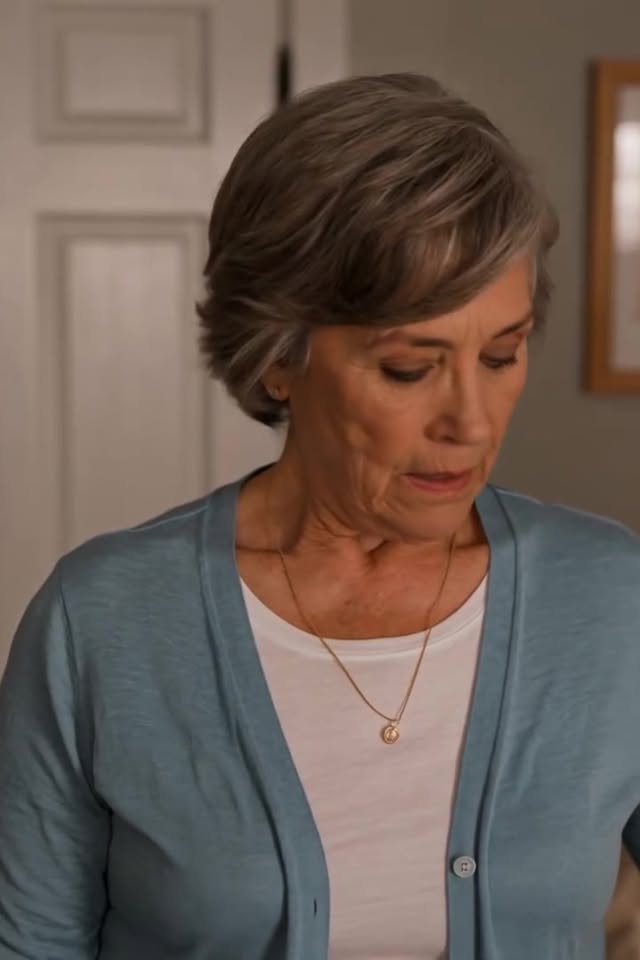
My son and his wife gave me an ultimatum: either I take full responsibility for the twins, or I have to move out of the house. I simply smiled, calmly packed my things, and left. But that was only the beginning — a week later, something happened that shook me even more than the ultimatum and my departure from the house. 😲😲
Clara said this while standing in the doorway of the children’s room, her arms crossed, as if she were reprimanding an employee. Behind her, on the carpet, the children were playing: one was gnawing on a bright cube, the other was laughing at a toy car.
Martin stood by the kitchen island, absorbed in his phone, as if what was happening had nothing to do with him. In the house, the dishwasher hummed quietly, there was a smell of oatmeal, and the space suddenly felt cramped, as if there was no longer room for me.
I didn’t argue and didn’t allow myself to cry. I simply nodded and returned to the room where I had lived for the past three years after the death of my husband, Robert. At the time, it seemed like a temporary solution, but over time the temporary turned into an obligation, and then — into invisibility.
After his passing, I sold the house, gathered the remnants of our long life, and moved in with my son, because they needed help, and I — a family.
At first, everything really seemed right: I fed the children, put them to bed, felt needed again. Their laughter brought warmth back into my life.
But gradually, help turned into obligation. Small requests became constant. I bought groceries, paid bills, took on more and more, until it felt like the entire household rested on me alone. And there was no gratitude — only polite requests and silent expectation.
When I refused for the first time, it was about a short trip. I had found a replacement in advance, organized everything, but Clara took it as a betrayal. In that moment, I clearly felt it: to them, I wasn’t family, but convenience.
That morning, when the ultimatum was given, I calmly repeated my decision to leave for a few days. In response, I heard a harsh choice. Martin stayed silent — and that hurt the most.
I packed my suitcase, carefully folding my clothes and my husband’s photograph. The children were laughing somewhere in the bathroom, and that ordinary sound strangely contrasted with the fact that everything inside me had already changed.
I left quietly, without any scenes. I simply closed the door behind me and, for the first time in a long while, felt lightness.
I rented a room in a small motel. In the evening, I warmed up some soup, turned on the TV, and realized that no one would call me from the next room. That silence was honest.
The next day, I began reclaiming my life: I stopped payments, removed access to my accounts, and stopped covering their expenses. With every call, it felt like I was taking a piece of myself back.
Later, I reviewed the documents: transfers, receipts, expenses — everything I had invested for them. I had never reminded them of it, believing that love is not measured in numbers.
But when messages started coming from them asking me to return, I understood: it wasn’t me they missed, but what I did for them.
A week later, sitting in the same motel room with a cup of cheap coffee, I was sorting through the mail when the phone rang. It was the bank where Robert and I had been clients for many years.
I confirmed that I wanted to remove Clara from the account.
After a pause, the employee spoke more quietly:
— Before we complete the operation, you should know something…
Continuation in the first comment.👇👇
Source